Sale! 1909 Philadelphia Jewel Box Of Jacobethan Splendor “Maison Rex”
8700 Seminole St, Philadelphia, PA 19118
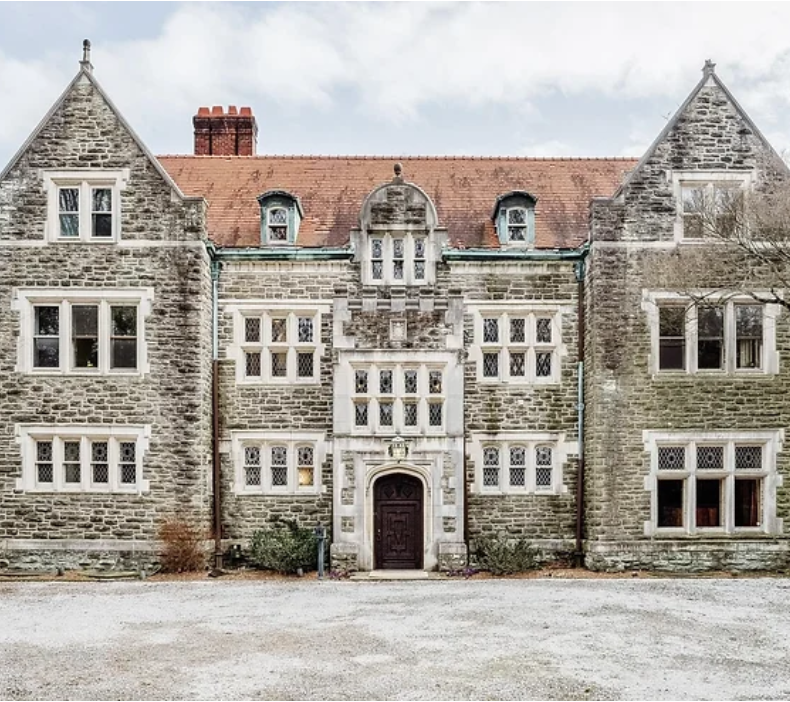
At the bend of a quiet, tree-lined road, where ivy drapes over limestone walls and the scent of lilac lingers in the air, stands a home that seems plucked from another century. With its turrets, chimneys, and hand-hewn oak door, this 9,136-square-foot Jacobethan masterpiece invites both reverence and wonder. Priced at $1,500,000, it is not just a house—it is an heirloom of architecture, a living fragment of history ready to begin a new chapter.
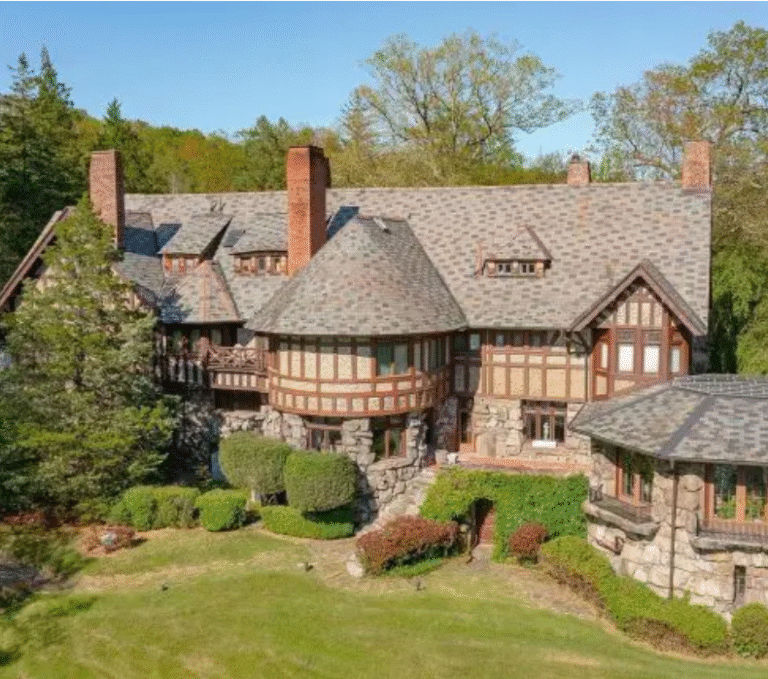
Set upon one and a half acres of gated grounds, the mansion commands attention from the moment it appears through the foliage. Its silhouette rises like something from an English country estate—part fortress, part fantasy—with stone walls etched by time and windows that catch the shifting light. The conical-roofed turret wraps around the porch, giving the façade a whimsical grace. As you approach, the craftsmanship reveals itself in the smallest details: the wrought-iron hinges on the oak door, the intricate carvings that line the entryway, the subtle geometry of centuries-old design rendered in American soil.
Step through that great wooden door, and the transition from exterior grandeur to interior splendor is immediate. The foyer is a space meant to make an entrance memorable. Vaulted ceilings draw the eye upward; beams of light filter through stained glass, scattering color across the flagstone floor. The air smells faintly of oak and wax—timeless materials that have aged beautifully over generations. Ahead lies the main hall, a soaring double-height expanse crowned by a dramatic oak-paneled staircase that winds upward like a sculpture. A vast stone fireplace anchors the room, its mantle carved with delicate strapwork patterns that echo Elizabethan craftsmanship. Here, form and function are one: beauty that endures because it was built to last.

The architecture belongs to the Jacobethan style, a Renaissance revival that merges Gothic drama with Tudor refinement. It is a rare sight in America, and rarer still in such preserved condition. The ceilings bear intricate plasterwork; windows open with leaded panes; the lines of the house are noble yet human. Though grand in scale, it feels unmistakably like a home—one that has seen laughter, music, and the warmth of countless gatherings.
To the right of the hall lies a library worthy of a scholar’s dream. Its wood-paneled walls rise to meet coffered ceilings, the shelves filled with the scent of old books and the sheen of polished oak. A corner fireplace of veined marble crackles softly beneath a bay window that frames the garden beyond. It is a room for winter afternoons and quiet thought, for reading until the light fades and lamps glow amber in the dusk.
From the library, double doors lead into the music room—a sun-washed chamber where art and architecture dance together. A brass chandelier gleams overhead, casting a soft reflection on the parquet floor. French doors open to the terrace and greenhouse, allowing melodies—or laughter—to drift easily between indoors and out. It is easy to imagine evenings here: a pianist at the keys, the notes spilling into the night air as the scent of jasmine rises from the garden.

Across the hall, the formal dining room commands its own kind of grandeur. The ceiling, adorned with Elizabethan strapwork, resembles a sculpted tapestry. The fireplace mantle is hand-carved with mythical creatures and heraldic symbols, reminders of a time when craftsmanship was storytelling. Candlelight transforms the space into a scene from another age—opulent but intimate, stately yet inviting. One can picture long dinners here, the glow of the fire mingling with laughter and the clink of glasses, the memory of such moments preserved in the wood itself.
Yet despite its historical richness, the house is far from trapped in the past. Its evolution has been thoughtful, guided by respect for what was and a clear vision of what should be. The kitchen, fully renovated, bridges that divide perfectly. Where once a staff might have labored over cast-iron stoves, there now stands a chef’s kitchen that marries functionality with beauty. An eight-burner professional range gleams beneath a tiled backsplash; honed marble countertops stretch across custom cabinetry of warm wood tones; farmhouse sinks evoke the old world while serving the new. Sunlight pours through oversized windows, illuminating every polished surface. Here, family breakfasts feel as natural as formal dinners do in the adjoining dining room.
Beyond the kitchen lies access to the terrace—a generous outdoor space paved in bluestone and bordered by wrought iron. From this vantage point, the estate unfolds like a private park. South-facing lawns slope gently toward the tree line, inviting picnics and garden parties beneath the open sky. Past the terrace gates lies the in-ground pool, a serene retreat framed by hedges and stone. Its surface mirrors the sky, reflecting both clouds and centuries-old chimneys alike.

The greenhouse, connected to the terrace, offers another realm of tranquility. Its glass walls shimmer in the afternoon light, sheltering plants that thrive year-round. In winter, it becomes a warm refuge, filled with the earthy scent of soil and the rustle of leaves. For the horticulturally inclined—or anyone who finds peace among growing things—it is a treasure.
The wrap-around porch completes the ground floor’s embrace of both architecture and landscape. With its turreted corner and wide eaves, it provides an ideal spot to watch the seasons unfold. Rain against the roof in spring, cicadas in summer, the blaze of foliage in autumn—all are experienced here with an intimacy that modern homes rarely achieve.
Upstairs, the rhythm of the house changes. The grand procession of rooms gives way to quiet corridors and sunlit suites. Two of the second-floor bedrooms are true retreats, each with its own fireplace and full bathroom. The proportions are generous, the ceilings high, the windows tall. Morning light filters through leaded glass, dappling across rugs and carved wood. These rooms were designed not merely to impress guests, but to comfort those who live here.

On the top floor, dormer windows frame sky and treetop views. Three large bedrooms occupy the main expanse, their gabled ceilings lending a storybook charm. Two smaller rooms—ideal for studios, nurseries, or creative workspaces—extend the home’s sense of flexibility. The play of light up here is exquisite; even on overcast days, the rooms feel alive with texture and warmth.
Below stairs, in the basement level, the tone shifts once again. Here, modern life unfolds with ease. The stone walls that once stored coal now surround a fully outfitted home bar, perfect for entertaining on cool evenings. The space invites laughter, conversation, the clinking of glasses and the hum of jazz records spinning somewhere nearby. Behind the bar, modern mechanical systems ensure the mansion runs smoothly—a careful fusion of past and present engineering. There is also abundant storage, discreetly tucked away, ensuring that the home remains as functional as it is beautiful.
Outside, the detached two-car garage has been recently renovated, its style matching the main house. It offers not only secure parking but also a sense of continuity—proof that every update here has been executed with care and respect for the estate’s aesthetic language. From the front gates to the furthest edge of the lawn, every detail speaks to a love of craftsmanship and a reverence for history.

And what history it is. The Jacobethan style, with its origins in late Elizabethan England, was born from a fascination with the poetry of stone, the drama of form. In America, it found expression in only a handful of landmark estates, built for those who valued artistry over ostentation. This home stands among those few. The hand-carved newel posts, the vaulted vestibule, the brass fittings polished smooth by generations of touch—each detail tells the story of builders who saw their craft as legacy.
To walk through these rooms is to feel that legacy alive. It lingers in the echo of footsteps along the hall, in the way light catches the stained glass of the landing window, in the quiet authority of a house that has endured for more than a century. And yet, despite its pedigree, there is nothing forbidding about this place. It welcomes. Its grandeur hums at a human scale. Its luxury feels lived-in.
In spring, the gardens come alive—tulips, lilacs, and magnolias painting the grounds in color. Summer brings laughter from the pool and the rustle of leaves in the porch shade. Autumn transforms the estate into a golden world, each window framing a living painting. And in winter, when snow outlines the rooflines and the fireplaces crackle to life, the mansion becomes something out of a storybook: warm, luminous, eternal.

For the next owner, this home offers more than architecture or acreage—it offers the chance to live inside art. It invites restoration, creativity, and a sense of stewardship. It is a property that rewards imagination, that could serve equally as a private residence, a writer’s retreat, or a gathering place for generations to come. The balance it strikes between authenticity and livability is rare; the feeling it gives, rarer still.
In an age when luxury is often defined by novelty, this estate stands apart. Its beauty is not new—it is enduring. Its materials are not sleek but soulful. Its walls have seen history unfold and are ready to see more. For $1,500,000, one might expect square footage and amenities; here, one receives something else entirely: a living piece of craftsmanship, wrapped in the quiet dignity of time.
When twilight falls, the lights within glow softly through leaded panes. From the garden, the mansion appears almost alive—its turrets outlined in gold, its windows flickering with warmth. The oak door closes with a satisfying weight, and the night air fills with the mingled scents of grass and woodsmoke. The world beyond fades away. Within these walls, life slows, deepens, and begins to feel like something lasting.

And so the house of stone and oak waits for its next chapter. For someone who values history not as nostalgia but as inspiration. For someone who understands that luxury is not about perfection, but about presence. The kind of person who, upon stepping through that hand-hewn door, will know immediately that this isn’t just a property—it’s a legacy.
Photos:


Listed by: Marc Hammarberg 215-790-5501