For Only $5.35 Million! The Historic 1909 Capitol Hill Mansion in Seattle, Washington
$5,350,000 | 1909 | 9,330 Sq. Ft. | 7 Beds | 6.5 Baths | 0.52 Acres
1409 E Prospect St, Seattle, WA 98112
There are certain homes that seem to hold the city’s memory in their walls—places where the air feels charged with the quiet hum of time. On a leafy stretch of Capitol Hill, overlooking the city from its gentle rise, one such house stands at 1409 East Prospect Street. For more than a century, this grand mansion has witnessed the evolution of Seattle—from a frontier port to a metropolis of glass towers—and yet, behind its wrought-iron gates, life has always moved to a more graceful rhythm.
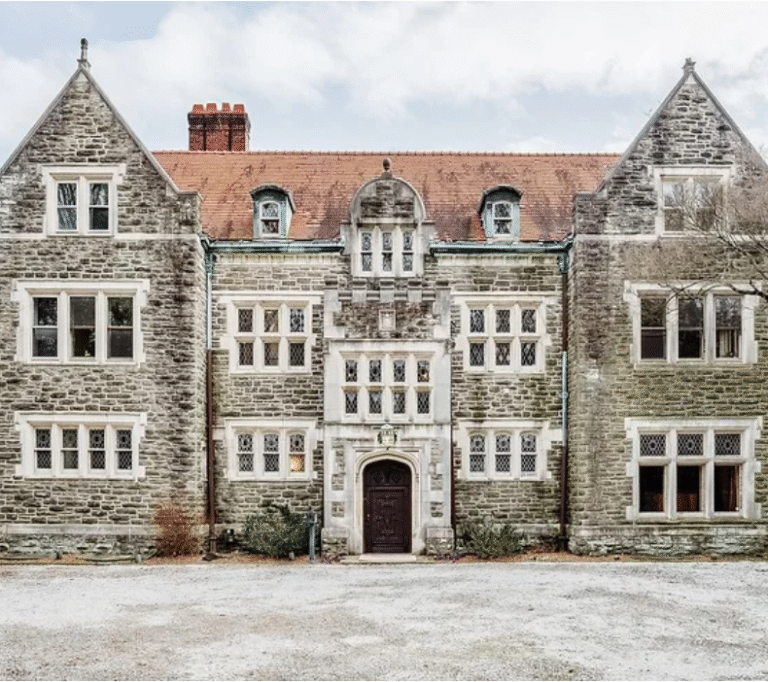
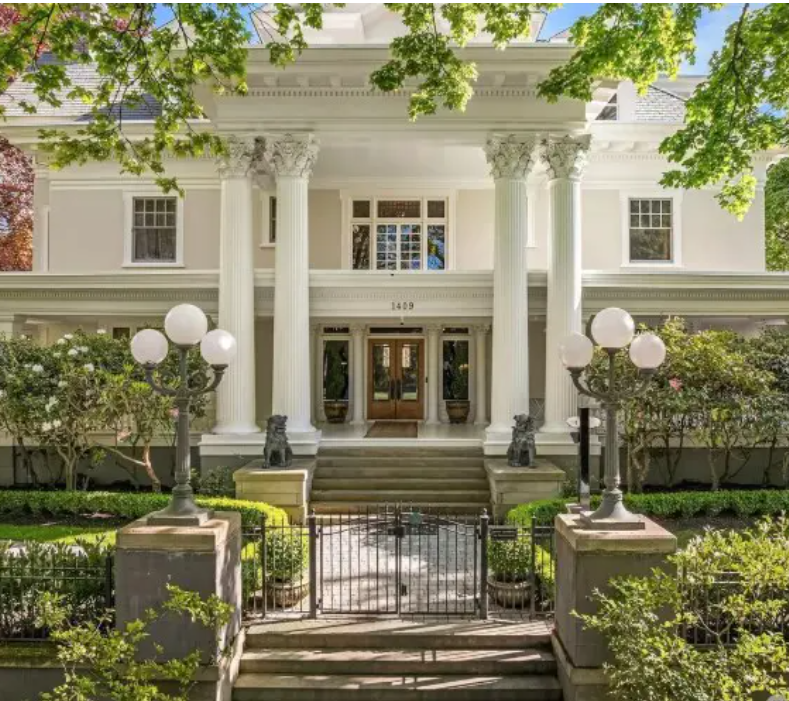
The first glimpse comes through a veil of green. Mature trees lean protectively over the gravel approach, their branches forming an archway of dappled shade. The house reveals itself slowly: broad porches framed by Doric columns, a symmetrical façade softened by climbing ivy, and the unmistakable poise of early 20th-century architecture. It is the kind of presence that commands silence for a moment—a pause to take in the craftsmanship, the scale, the sense that something significant lives here.
Built in 1909, the mansion is among Capitol Hill’s finest surviving examples of its architectural golden age. When the district first emerged as Seattle’s most distinguished neighborhood, this home was the kind of address that signified success, taste, and permanence. Over the decades, its walls have absorbed laughter from countless dinner parties, music from grand pianos in the drawing room, and the quiet murmur of conversations that span generations. Today, listed at $5,350,000, the estate remains as extraordinary as it was when it first welcomed guests beneath its portico.

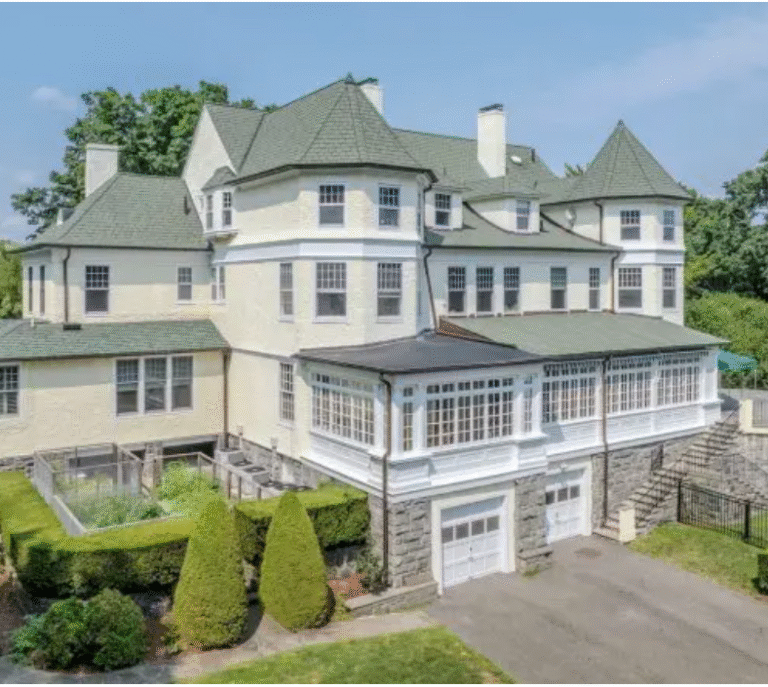
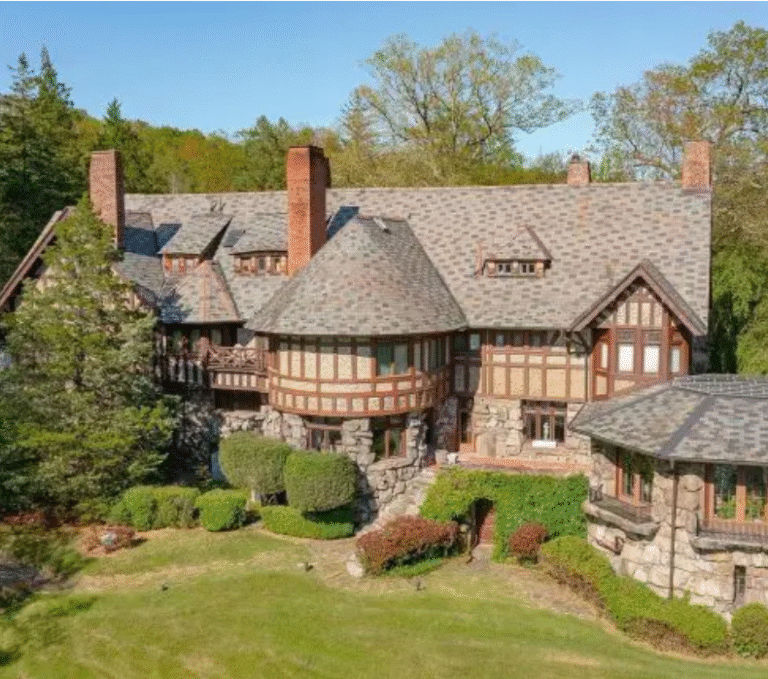
Behind the gates, the property unfolds across more than half an acre—a rare expanse of land in this coveted neighborhood. The lawns stretch outward like a private park, punctuated by old-growth trees and gardens designed for both beauty and seclusion. The carriage house and garage still stand as reminders of a time when elegant arrivals meant the sound of hooves and the clatter of wheels. The mansion itself rises in red brick and white trim, its architectural detailing crisp against the lush greenery. Even before you step inside, it’s clear this is not merely a house, but a statement of heritage.
Inside, the transition from city to sanctuary is immediate. The mahogany-paneled foyer greets visitors with a warmth that only old wood can provide—a glow deepened by time and polish. Light filters through leaded glass windows, touching the grand staircase with a soft shimmer. Everything about the space feels deliberate: the craftsmanship of the balustrades, the gleam of the hardwood floors, the quiet echo that belongs only to homes built with true proportion.
From the foyer, rooms unfold with a natural flow that speaks of gracious living. To the left, the drawing room extends nearly the length of the house, anchored by a stately fireplace and framed by a trio of tall windows. In the early 1900s, this would have been the social heart of the home—a place for conversation, for music, for evenings spent beneath the chandelier’s warm light. Today, its atmosphere endures, adaptable yet timeless. A music alcove still invites the presence of a piano, and the adjoining office offers a more intimate retreat, lined with books and suffused with afternoon light.

The formal dining room stands as a masterpiece of period design. Oak wainscotting rises to meet walls adorned with hand-painted murals—pastoral scenes that seem to glow softly under the delicate light of Tiffany pendants. One imagines the long table set for twelve, the silver catching the flicker of candlelight, the conversation animated but polite, as it would have been when this room first came alive. Yet despite its grandeur, the dining room remains deeply welcoming, its beauty never overbearing. From here, French doors open to a kitchen that bridges centuries with effortless grace.
The kitchen is perhaps the best expression of how this house has evolved. Where once stood a utilitarian service area, there is now a chef’s haven—spacious, bright, and functional. Subtle modernity defines the space: custom cabinetry, marble counters, top-tier appliances—all designed to blend with the home’s period character. There’s still a hearth-like intimacy here, a sense that meals are not just prepared but celebrated. A breakfast nook by the windows overlooks the gardens, inviting quiet mornings with coffee and sunlight. In this balance of old and new lies the secret of the mansion’s enduring appeal: it has grown with time rather than fought against it.
As the staircase ascends to the upper levels, the home becomes more private, more personal. The landing is wide, lined with original moldings and accented by a graceful turn toward the sleeping quarters. Each bedroom offers a distinct personality, shaped by light, view, and detail. The primary suite is serene, with generous windows that frame the treetops and skyline beyond. There is room here not just for rest, but for retreat—a private study or reading nook where work and reflection intertwine. The en suite bath, modernized with care, offers comfort without disturbing the home’s historic rhythm.

Other bedrooms echo this thoughtful balance. One faces the gardens, its morning light filtered through climbing vines. Another, tucked beneath the eaves, feels like a secret—a perfect hideaway for guests or children. Throughout, period hardware and original trims serve as quiet reminders of the house’s lineage. The craftsmanship that shaped these details a century ago remains as precise and enduring as ever.
Below, the lower level transforms formality into ease. Where servants once managed the unseen labor of running a household, the space has been reimagined for leisure. A billiards room anchors the floor, its vintage charm complemented by modern comfort. Nearby, a media area beckons for film nights or quiet reading. Perhaps most enticing is the wine room, a jewel box of glass and wood where the air carries the faint, familiar scent of oak and cork. It’s easy to imagine the owner selecting a bottle for dinner, savoring the continuity of pleasure across generations.
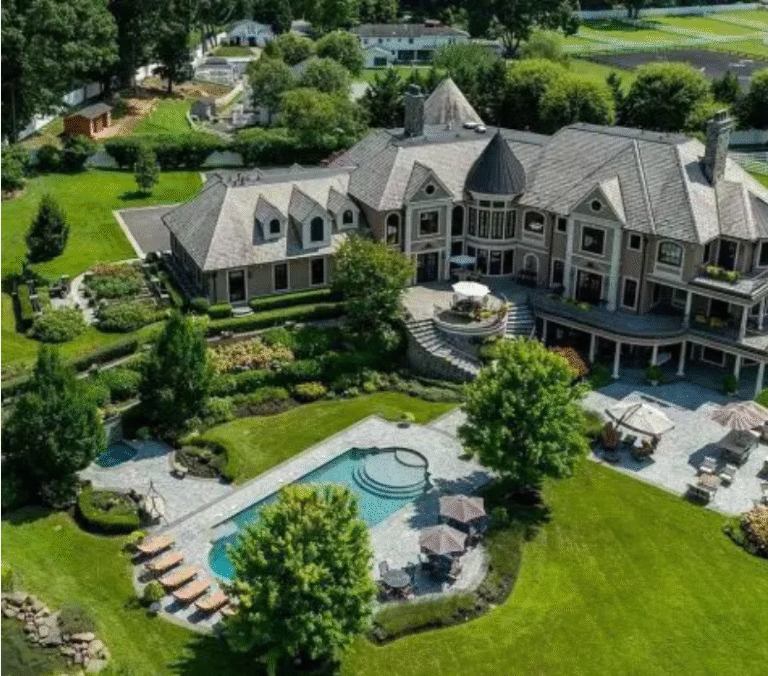
Yet, it’s outdoors that 1409 East Prospect Street reveals its soul most fully. The gardens, enclosed by hedges and ironwork, create a world unto themselves. Pathways curve through lawns and flowerbeds; benches invite pauses beneath the shade of maples. The sound of the city fades here, replaced by the whisper of leaves and the distant call of a bird. It’s a rare kind of tranquility—especially remarkable given the home’s proximity to downtown. The porches, wide and welcoming, serve as open-air salons in the warmer months. From here, the mansion feels both intimate and infinite, an island of calm within the city’s pulse.

Capitol Hill has always been Seattle’s most storied neighborhood—a place where architecture and art intersect, where history feels lived rather than preserved. Just a few blocks away lies Volunteer Park, its conservatory and museum drawing visitors year-round. Around the corner, tree-lined streets lead to cafés, galleries, and historic homes that echo one another in quiet dignity. For residents, this setting offers the best of both worlds: cultural vitality and privacy, sophistication and ease. To live on East Prospect is to be part of Seattle’s narrative in its most refined form.
But what truly distinguishes this mansion is not only its scale or its beauty—it is its continuity. Few properties manage to retain their essence through the shifting tides of time. Many grand homes become relics, their grandeur fading into nostalgia. This one, however, feels alive. Its walls still ring with the laughter of new generations; its rooms still adapt to the needs of the present. The architecture remains authentic, yet the living experience feels effortlessly modern. It is a home that respects its past but refuses to be confined by it.
As Seattle continues to evolve, properties like this grow ever rarer. Developers may build taller, glassier structures, but they cannot replicate the tactile soul of a century-old mansion. The hand-carved wood, the subtle imperfections, the way the afternoon light catches on the banister—all these things belong to a slower, more deliberate age. To own such a house today is to become its steward, not merely its occupant. It’s an act of preservation as much as of living.

And yet, 1409 East Prospect Street is no museum. It is a place meant to be lived in, with laughter echoing through its halls, dinners shared in its dining room, and quiet mornings spent among the roses. It is easy to picture a family here—children racing up the stairs, friends gathering for holidays, evenings by the fire as rain taps against the windows. Despite its grandeur, the house has a rare warmth. It invites not awe, but affection.
For those who seek more than luxury—for those who value legacy—this home offers something few others can. It embodies a chapter of Seattle’s architectural history while providing every comfort of modern life. It is both past and present, city and sanctuary, elegance and ease. Priced at $5,350,000, it stands as a reminder that true luxury is not about excess, but about enduring beauty and a sense of belonging.
In the end, the house on East Prospect is less about square footage than about spirit. It is the creak of old floors beneath soft steps, the fragrance of mahogany warmed by sunlight, the sense that time here moves differently. To live within its walls is to inhabit a story—one that began over a century ago and continues still, waiting for its next chapter to be written.
Photos:


Betsy Terry • bterry@ewingandclark.com
Ewing & Clark, Inc.
Photography Credit: Clarity NW Photography